
When to use a flow
Use a flow when a task has several stages, needs to repeat across many items, or needs a human check partway through. For example:- Update multiple playbooks at once
- Create an automated intake flow that gathers information, selects and runs a playbook, and saves the redlined agreement to the Icertis platform.
How a flow is built
A flow is organized into phases, which show its progress while it runs. Each phase contains one or more steps:
Steps that don’t depend on each other run at the same time, so flows can finish large jobs faster than working through them one by one.
Create a flow
1
Start a new flow
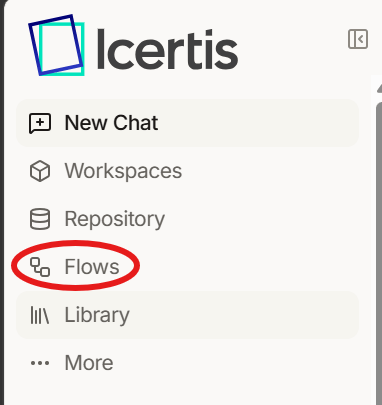
In the web app, click Flows in the left-hand menu, then click New Flow.
2
Describe the goal
Under What should this flow accomplish?, describe the outcome you want. Be specific about the inputs, the work, and the result.
3
Attach reference documents (optional)
Click Attach documents to add materials that should inform the flow, such as a sample contract, a checklist, or a template.
4
Draft the flow in chat
Click Start drafting. A chat opens where the agent asks clarifying questions and proposes the steps.
5
Approve and save
Review the proposed design and ask for any changes. The agent saves the flow once you approve it, and it appears on your Flows page.
Explore a flow
Click any flow card to open it. Cards show Shared with you for flows someone else owns and a published badge (for example, v2 published) when a version has been published.
Use the All and My Flows filters on the Flows page to switch between every flow you can access and only the ones you created.
Edit a flow
Open the flow, click Chat, and describe the change. For example:Add a manual approval step before any emails are sent.Also flag missing limitation of liability clauses.
Run a flow
Ask the chat to run the flow by name, for exampleRun the termination clause review flow on my renewal contracts. The agent gathers the inputs the flow needs and starts the run.
While it runs, a Flow run card in the chat shows the overall status, the time elapsed, and the status of each step. Fan-out steps are grouped so you can see how many items are completed, running, or failed. Click Open run for the full run view. When the run completes, the result appears in the card and the agent presents it in the chat.
Approve a manual gate
When a run reaches a manual gate, it pauses with the status Awaiting human and the agent asks you the gate’s question in the chat. Reply with your decision and any notes. If you approve, the run continues. If you reject, the flow follows the gate’s instructions: it either stops or retries an earlier step with your notes so the agent can correct its work.Run statuses
Publish a flow
Publishing makes a specific version of a flow available to whole teams. Publishers can publish flows to the teams where they’re a Publisher. Users can build draft flows but can’t publish them. See Roles and teams. When a flow is run, its Owners and Editors get the latest saved version by default, so they can test changes before publishing. Everyone else runs the published version.Flows can send email when a step’s instructions tell them to. Every recipient must be a member of your organization. To review messages before they go out, put a manual gate before the email step.